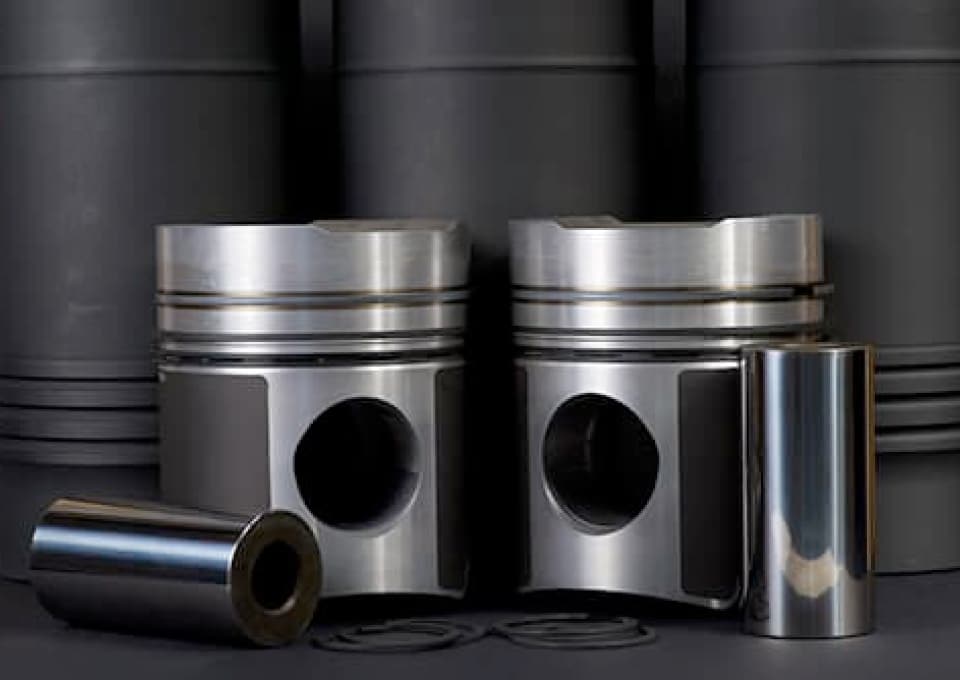
Pistons and cylinder liners do the hardest job in a diesel engine. Every combustion stroke slams thousands of degrees and enormous pressure against the same few square centimetres of metal, thousands of times a minute, for years. They are built to take it, but nothing built to take that lasts forever. Knowing how this part of the engine wears, and reading the signs in time, is the difference between a planned overhaul and a seized engine.
The wear no one can see
Inside each cylinder, the piston rings ride against the liner wall on a microscopic film of oil. Over thousands of hours that wall slowly loses its shape. The top of the liner, where combustion is hottest and lubrication thinnest, wears into a faint barrel or oval. The ring grooves widen. The rings lose tension. None of it shows from the outside, and none of it happens overnight, which is exactly why it is so easy to run it too long.
The result is a slow loss of the seal between piston and liner. Combustion pressure that should drive the piston down leaks past the rings instead, and the symptoms start to surface.
Signs the bores are tired
A diesel rarely keeps this kind of wear a secret. Watch for these, especially together:
- Rising oil consumption. Worn rings and liners let oil into the combustion chamber, so you top up more often and see bluish smoke at the exhaust.
- Blow-by. Combustion gases forced past the rings pressurise the crankcase. A breather that puffs or pushes oil mist is the classic tell.
- Harder starting and lost power. Lower compression means less of the heat that lights the fuel, so the engine cranks longer and pulls weaker under load.
- More fuel for the same work. An engine straining to make its rated output quietly drinks more.
Any one of these has other possible causes. Together, they point firmly at the cylinders.
Why kits beat single parts
When the time comes, replacing one ring or a single liner is almost always a false economy. The parts in a cylinder are matched to wear together, so a fresh piston against a tired bore, or new rings in a worn liner, never seals the way it should and wears out fast. That is why a cylinder liner kit, holding the liner, piston, rings, gudgeon pin and the sealing rings to fit it, is the standard approach. Everything in the kit is matched, and the whole cylinder returns to factory clearances in one go.
For Volvo Penta and MAN engines, the kit has to match the exact engine variant. Bore size, liner collar height and the sealing-ring arrangement differ between models, and a kit that is close but not correct will leak or fail to seat.
Doing the job once
A liner-and-piston job is real work, so it pays to do it properly. Measure before you commit: checking bore wear and out-of-round tells you which cylinders actually need attention and confirms which kit to order. Renew what sits alongside, too. The overhaul gasket set and any cylinder head work go hand in hand with new liners, and doing them together saves opening the engine twice.
Above all, keep it clean. A speck of grit on a new liner or a misfitted sealing ring can undo the whole job. This is precision work, not brute force, and the engine will repay the care.
Plan it, don’t wait for it
The engines that cost their owners the most are the ones run until something lets go. By then a worn liner may be scored beyond saving, or a broken ring may have taken the piston and the head with it. Catch the wear while it is still only lost compression and a catastrophe turns into a scheduled job, booked when it suits you rather than when the engine decides.
MK Parts keeps cylinder liner kits, piston ring kits, overhaul gasket sets and related components for Volvo Penta and MAN engines in stock, matched to your exact engine and shipped across Europe in one to two days. Send us your engine number or the OE numbers from the old parts and we will put the right kit together for you. Contact us for availability and pricing.